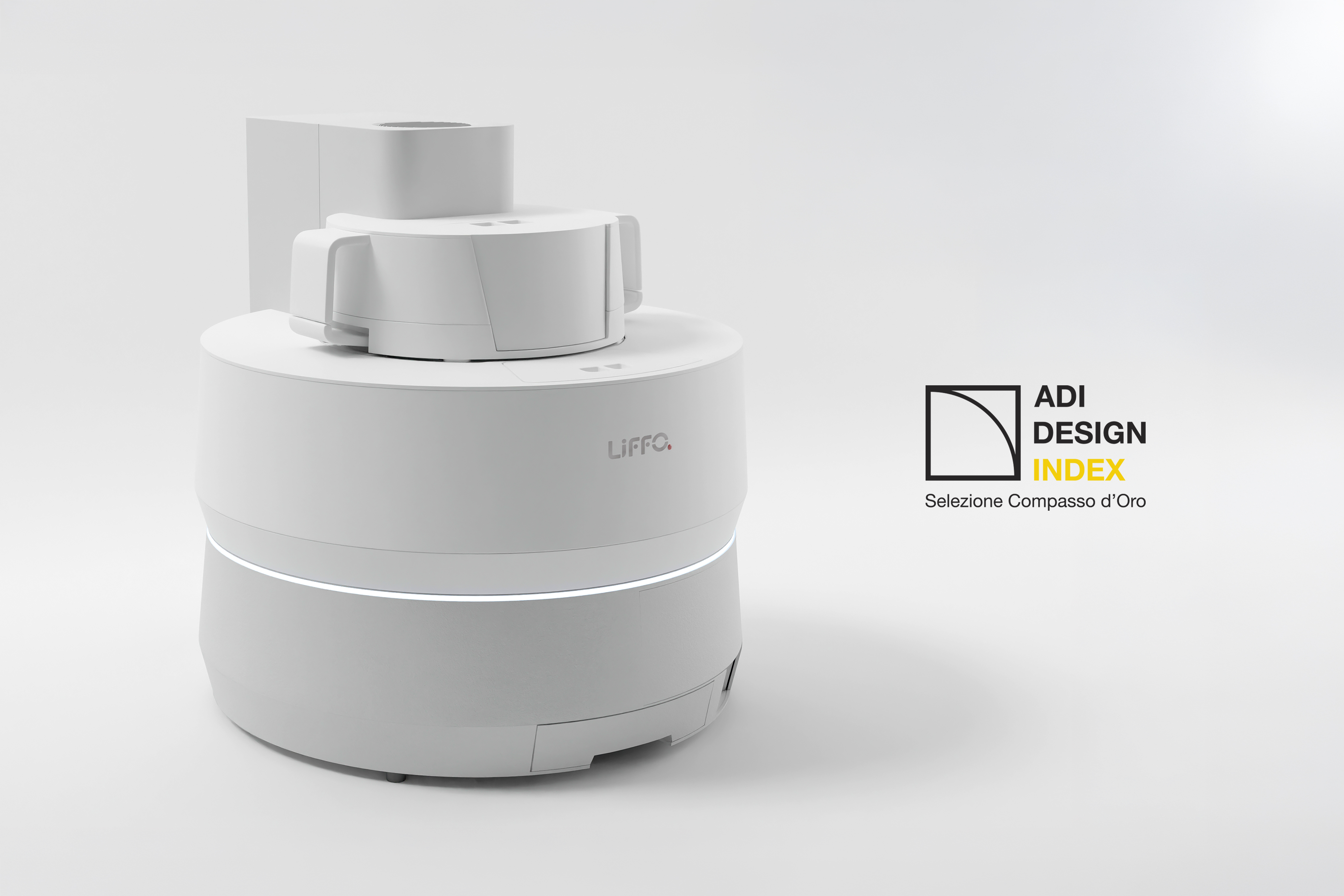
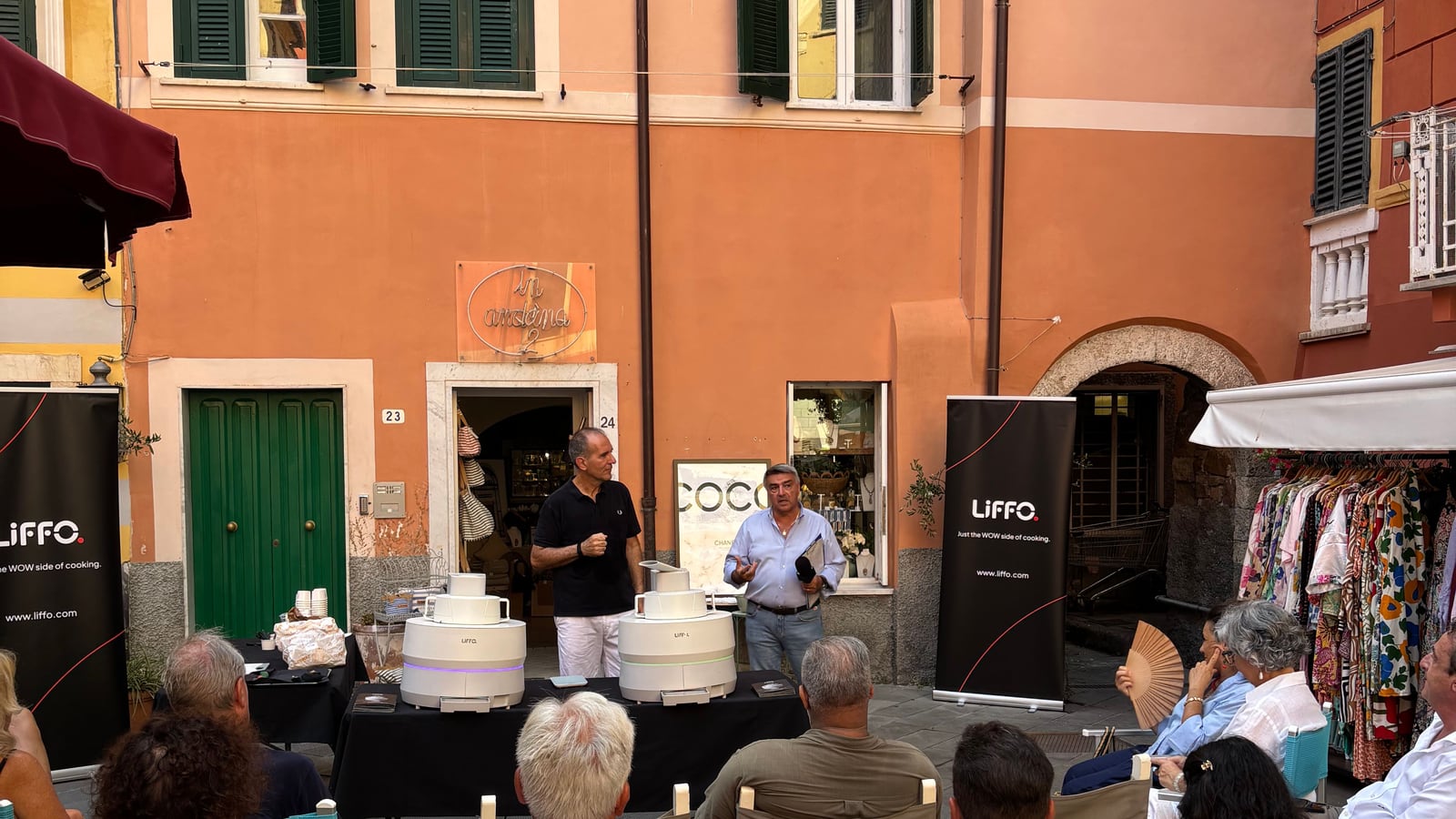
On 1 October, at the ADI Design Museum in Milan, the new edition of the ADI Design Index was presented: 340 projects chosen by the Permanent Design Observatory to show where Italian design is heading. Liffo is among them, selected in the Food design category — one of the fourteen the Index is divided into, and one of the smallest: eleven projects in all.
This is not an award for a campaign or a launch. It recognises the project itself, and the research behind it: the way a very complicated technology became an object you can live with. Underneath, though, there is a simpler idea, and it is the one we care about most — that home cooking should not merely be remembered, but put back into circulation.
What the ADI Design Index is
ADI — the Italian Association for Industrial Design, founded in 1956 — selects each year the projects that stand out for quality, innovation and design value, and gathers them in a publication that is one of the reference points of design culture in Italy. Being included means seeing your work recognised and documented there.
The assessment does not stop at form. It weighs innovation, function, materials and technologies, manufacturing processes, sustainability, accessibility, and above all the relationship between the object and the person who will actually use it.
"A picture that is not exhaustive, but certainly plausible, of the state of the art of Italian design: a photograph that, year after year, gives us an evolving portrait of the design system and of its relationship with society."
Luciano Galimberti, president of ADI
Where Liffo comes from
Liffo was born in Reggio Emilia out of an idea of Massimiliano Delsante, founder and managing director of Robomagister: a place where technological innovation and food culture have shared the same street for as long as anyone can remember, and where it felt natural to ask what happens if you put them to work together.
The design was entrusted to two studios that won a competition among several designers. Stefano Lodesani Studio, in Reggio Emilia, is the practice that Stefano Lodesani, architect, opened in 2010 after his degree and master's at the Politecnico di Milano and further training in the United States, between the California College of Arts and Crafts and Berkeley: it works across architecture, interiors, exhibition and product design, looking each time for the balance between space, material, light and function. Sapiens Design Studio, in Milan, was founded in 2017 by Alessandro Mattia and Gloria Gianatti, both trained at the Politecnico: they conceive every product as a narrative device, something that suggests uses and sparks curiosity, with constant attention to environmental, social and cultural sustainability.
Both work internationally across architecture and design. Together, they developed a language able to give a friendly, reassuring, almost familiar face to an extremely sophisticated technology.
Complexity that chooses to hide
The problem the two studios faced was not how to design a machine. It was how to let a machine like this one sit in a kitchen without feeling alien there.
Their answer was to conceal the complexity rather than display it. Every technical element is integrated into the volume; even the display retracts out of sight. The matte materials are pleasant to the touch and easy to clean, and that alone is enough to move Liffo from technological device to natural presence in the home.
The rounded forms of the main body are balanced by taut lines that cast sharp shadows on the side surfaces and lighten it visually. The LED band, through which Liffo tells you what it is doing, marks out the different levels of the object and recalls an image everyone knows from their own kitchen: pots and pans stacked one on top of another.
Then there are the two large "ears" on the lid. They were already there in the first sketches and stayed to the very end. They are what give Liffo an anthropomorphic, friendly character you recognise instantly — and the reason why people who see it for the first time usually smile.
A dialect name, and a cuisine that carries on
The name has its roots in Emilian food culture. In the dialect of Reggio Emilia, "liffo" means something delicious: a household word, the kind you never learn from books but at the table.
It is not just a tribute. It is a statement of what this object is supposed to do: safeguard a heritage and, at the same time, help renew it through the creativity and the tastes of whoever uses it.
Because that is where family cooking really risks being lost. Not when it is forgotten — the handwritten recipes are still in the drawers — but when nobody has the time to make them any more. A recipe survives only if someone cooks it: as long as it stays on a sheet of paper it is a memory; the moment it comes back to the table, it is living culture again.
This is the point where artificial intelligence stops being a technical specification and starts being useful. Liffo can read a recipe even from a photograph or a handwritten page, translate it into a procedure and carry it out. Then it learns the preferences of whoever uses it and gradually personalises the dishes — so that recipe does not stay frozen: it changes, it adapts to new tastes, it gets passed on. Cooking can be scheduled in advance and started even when nobody is home, and followed remotely through the built-in camera and the app.
The result is that your grandmother's dish does not end up in an archive. It comes back to the table on a Tuesday evening, eaten by someone who never saw her cook it, and from there it starts again. Liffo does not preserve food culture: it puts it back into circulation, and hands it on to whoever comes next.
The road to the Compasso d'Oro
Being in the Index is not only a publication: it is the prerequisite for access to the Compasso d'Oro, the award ADI has given since 1954, whose historical collection the Italian Ministry of Culture has declared an asset of exceptional artistic and historical interest.
The projects selected in 2026 and 2027 will form the pool from which the candidates for the 30th Compasso d'Oro ADI will be drawn, in spring 2028. As of today, Liffo is in that pool.
Thank you to Stefano Lodesani, to Alessandro Mattia and to Gloria Gianatti, who gave all this its shape. And to ADI, for looking at it closely.